
The Digital Muzzle: How Americans Fear Being Silenced in the Age of Platform Power
09:31 PM PST (February 08, 2026) - N.S. EIC
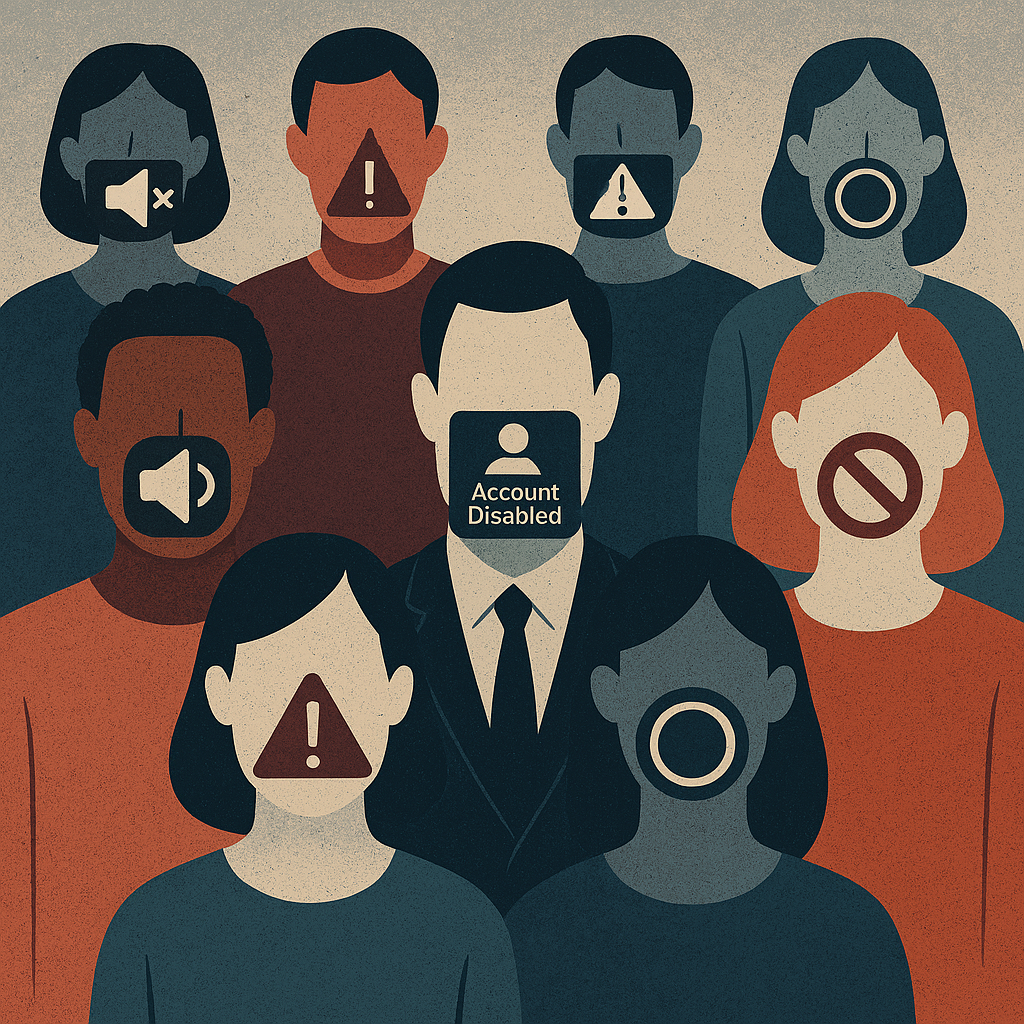
In a nation built on the promise of free expression, many Americans now feel that the digital public square, once a symbol of open discourse, has become a place where dissenting voices can vanish without warning. For those who question the actions of powerful political figures or challenge the direction of the government, the fear is growing that major platforms like Google and YouTube hold the ability to erase them with a single automated decision.
Whether or not these fears reflect official policy, the perception itself has become a political force. Millions of Americans believe that questioning those in power—especially in moments of political tension, puts them at risk of losing their accounts, their audiences, and their ability to participate in public debate. And in a democracy, the perception of censorship can be as destabilizing as censorship itself.
A New Kind of Vulnerability
For generations, Americans relied on constitutional protections to safeguard their speech. But the digital age has introduced a new complication: the most important arenas for public conversation are no longer public at all. They are privately owned platforms with opaque rules, automated moderation systems, and the ability to remove content or accounts without the transparency expected of democratic institutions.
To many users, this creates a sense of vulnerability. They see accounts disappear after posting political criticism. They see videos removed for “policy violations” without clear explanations. They see appeals denied by algorithms rather than humans. And they draw a conclusion (fair or not) that these platforms are acting to suppress viewpoints that challenge the current political regime.
When the Platform Controls Your Wallet To
For some users, the fear goes beyond losing a voice, it extends into their finances.
A growing number of YouTube TV subscribers report a disturbing pattern: accounts suddenly disabled or locked, often without a clear explanation, while billing continues uninterrupted. These users say they are unable to log in, unable to access support, and unable to cancel their subscriptions. They describe a closed loop of automated menus, dead-end help pages, and no human contact, all while charges continue to appear on their bank statements.
To those experiencing it, this feels less like a glitch and more like a system designed without accountability. When a platform can silence your speech and continue charging you after cutting off your access, the power imbalance becomes impossible to ignore.
Even if these incidents stem from technical errors or flawed support systems, the effect is the same: people feel trapped, unheard, and financially exploited by a company that controls both their voice and their wallet.
The Fear Behind the Silence
For those who believe their voices are being targeted, the fear is not just about losing a channel. It is about losing the ability to participate in democracy itself.
When people feel they cannot question authority without risking their digital identity, they begin to self-censor. They withdraw from debate. They stop asking hard questions. And in a society that depends on open dialogue to hold power accountable, that silence becomes dangerous.
Even if platforms insist they are enforcing neutral policies, the lack of transparency fuels suspicion. Without clear, consistent, publicly verifiable protocols, users are left to assume the worst, that political pressure, not policy, is driving enforcement.
The Global Consequences of Digital Gatekeeping
The United States has long championed free expression as a cornerstone of democratic society. When Americans feel silenced at home, the world takes notice. Allies who once looked to the U.S. as a model of open discourse now see a nation struggling to maintain trust in its own information ecosystem.
This erosion of confidence has ripple effects:
It weakens America’s moral authority abroad
It emboldens authoritarian governments who censor openly
It fractures the global belief that democratic societies can withstand internal dissent
When citizens believe they are being silenced, the legitimacy of the entire democratic project comes into question.
A Call for Transparency, Not Control
The solution is not government takeover of platforms, nor is it the elimination of moderation. Instead, Americans are calling for something far more basic: clarity.
They want to know:
What rules are being enforced
How decisions are made
Why certain content is removed
Whether political pressure plays any role
Why subscribers can be billed for services they can no longer access
How to reach a human being when something goes wrong
Without transparency, trust collapses. And without trust, democracy falters.
The Stakes Could Not Be Higher
Whether these fears are fully justified or not, they reflect a profound anxiety about the future of American democracy. When people believe that questioning political power can cost them their digital voice, and that they can be charged for services they cannot even access, the democratic system itself begins to feel fragile.
In a moment when the nation is already divided, the perception of digital suppression only deepens the fracture. Americans are not asking for special treatment. They are asking for the right to speak, question, and debate without fearing that their access to the modern public square, or their own accounts, will be revoked.
Silencing, even the fear of silencing, threatens the foundation of a free society. And if democracy is to survive the digital age, transparency and accountability must become the new pillars of public discourse.
BOYCOTT GOOGLE AND YOUTUBE. HIT THEM IN THE OLIGHARCH WALLET WHERE IT HURTS.